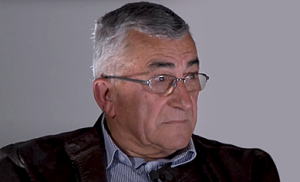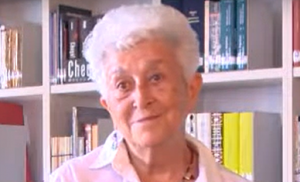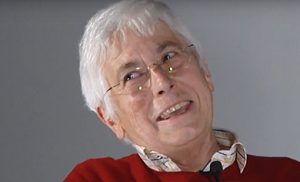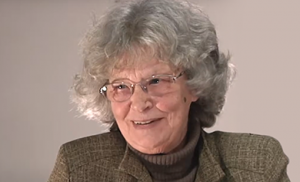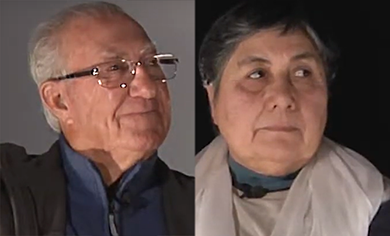
Júlio Oliveira e Silva and Maria Etelvina Rosa
Biography
Júlio Oliveira e Silva, a glassworker, was born in Marinha Grande in 1932. His father, Pedro da Silva, had been involved in the January 18, 1934, riots. At the age of three, Júlio found a revolver that had belonged to his father, hidden since that day.
He started working at a glass factory at the age of nine and, while still very young, participated in a strike protesting his employer’s delay in delivering the sandals he needed for work. He had been a member of the Portuguese Communist Party (PCP) since his youth. He was a coworker of glassworker António Lopes Almeida, who was murdered by the PIDE (Political Institute of the Interior) in 1949.
In 1974, glassworkers demanded a 100 escudos raise for all workers. In response to the employer’s refusal to discuss the proposal, Júlio Oliveira e Silva advocated for a work stoppage at a glassworkers’ meeting at the Sport Império Marinhense stadium. The following day, March 16, 1974, the strike began, in which women played a decisive role, forcing the employers to give in after three days. The 100 escudos were not obtained, but the 60 escudos were secured. The PSP (Socialist Party of São Paulo) and the PIDE/DGS (National Guard) occupied key points in Marinha Grande and monitored the entire struggle, but the coup of March 16 and the April 25 revolution prevented the PIDE/DGS from arresting the strike leaders, including Júlio Oliveira e Silva.
After the April 25 revolution, she joined the Glassworkers’ Union and promoted the fight for a collective bargaining agreement and the creation of a national glassworkers’ union.
Maria Etelvina Lopes Rosa Ribeiro was born in 1956 in Marinha Grande. Like her parents, grandparents, and uncles, she was a glassworker. She started working at the Manuel Pereira Roldão Factory at the age of 18, on February 18, 1974. About a month later, on March 16, she participated in the glass industry strike, in which women played a decisive role. This strike was triggered by a well-attended plenary session at the Sport Império Marinhense stadium. The demand was for a 100 escudos raise for all workers. The strike forced the employers to give in. After three days of strikes, the 100 cruzeiros daily raise was not achieved, but the workers secured a 60 cruzeiros raise. The PSP (Public Security Police) and PIDE/DGS (Public Security and Defense Directorate) occupied key points in Marinha Grande and monitored the entire struggle, but they did not arrest any of the strikers due to the failed coup of March 16 and the April 25 coup.
Maria Etelvina joined the Portuguese Communist Party (PCP) in 1980 and later served on its Central Committee. She worked for 20 years at the Manuel Pereira Roldão Factory and was involved in major struggles to defend jobs. She was head of the party’s cell at that company. She was active in unions linked to the glass industry, the General Confederation of Portuguese Workers (CGTP), and the Democratic Women’s Movement (MDM). In 2013, she was elected to the Marinha Grande Municipal Assembly by the United Democratic Coalition (CDU).
Date of Collection: 06.12.2017
Keywords: Glassworkers from Marinha Grande, Unionism, Family, Child labor, PIDE, Movement of 18 January 1934, Strikes, Prison of Aljube, Torture, Peniche.