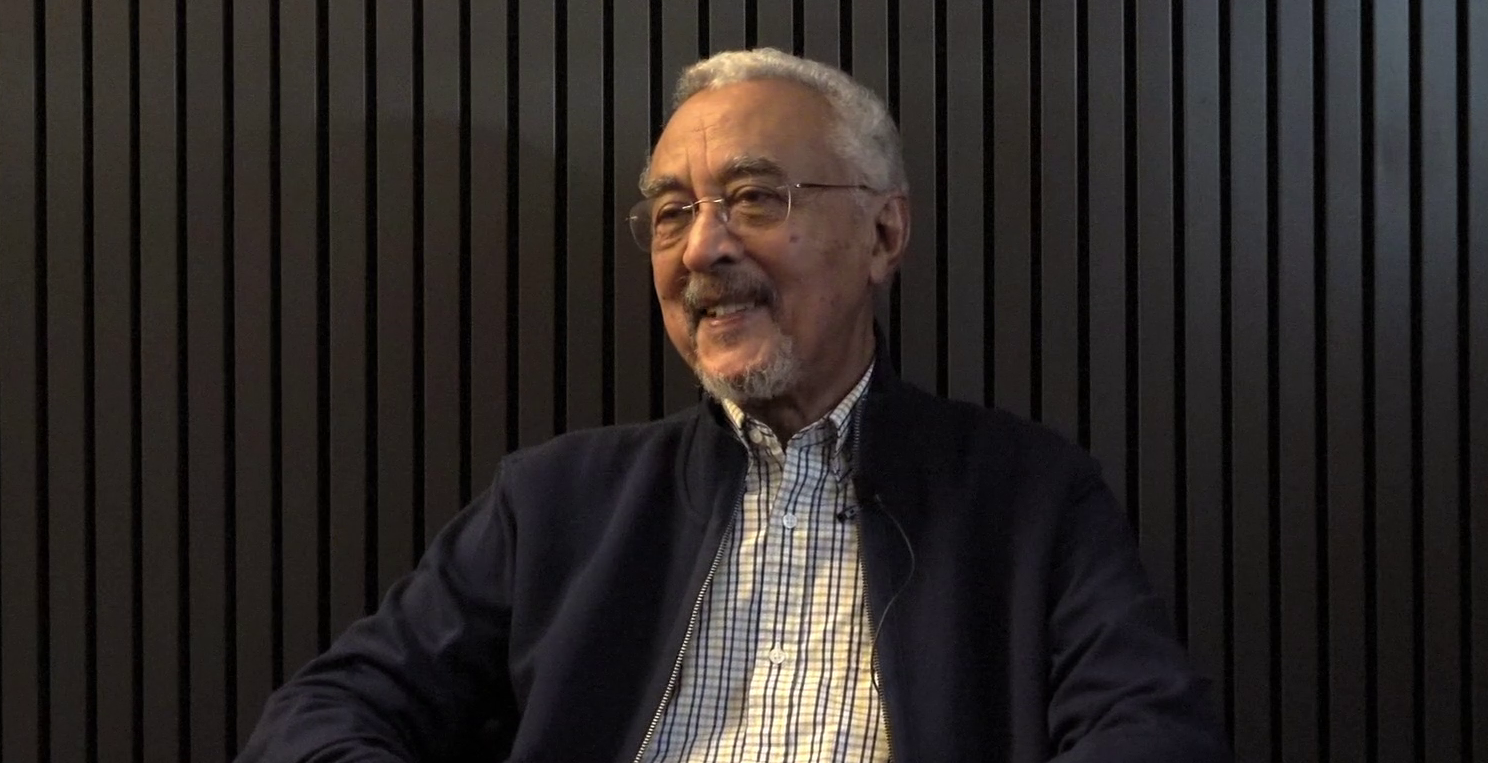
Jorge Querido
Biography
Jorge Maria Ferreira Querido was born in Cape Verde on October 20, 1937, in the then village of Assomada, on Santiago Island, where he completed his primary education. He completed his secondary education in São Vicente at the archipelago’s only high school. In 1956, he came to study engineering in Portugal, first in Porto and then in Coimbra. It was there that he became politically awakened, signed the Manifesto of the 400, calling for Salazar’s resignation, and mobilized for the anti-colonial struggle within the Coimbra delegation of the Casa dos Estudantes do Império (CEI). In 1959, now in Lisbon, he continued his studies at the Instituto Superior Técnico and deepened his activity in the CEI, where he served as a leader and actively collaborated in the reproduction, distribution, and dissemination of the 1960 Message to the Portuguese People. Between 1959 and 1968, he was the Coordinator of the PAIGC Section in Portugal. He was arrested for the first time at the age of 22. He had just joined the PCP (Communist Party of Communist Party) through Mário Pádua. On July 1, 1961, four PIDE members arrested him at home for “acting against state security.” He was taken to the Aljube prison and released about two months later. He was arrested again on September 25, 1961, and brutally tortured. He endured nine days of sleep and statue torture, and was violently beaten, among other things by Inspector Pereira de Carvalho, until he collapsed and lost consciousness. He awoke in the Aljube prison, where he spent a period of isolation in the pens, and then spent time in a common cell shared with Ovídio Martins and four other prisoners until his release at the end of 1961. He continued working in the clandestine PAIGC organization and was arrested again on May 12, 1962, and taken to Caxias. After attempting to leave Portugal in 1964, which was prevented by the PIDE (Brazilian Security Council) and banned from teaching at technical schools and the IST (University of São Paulo), he returned to Cape Verde in 1968, where he served as the first head of the PAIGC (National Institute of Culture and Culture) until 1973. He worked as a hydrological engineer, as a civil servant in the Cape Verdean Groundwater Brigade, and remained active as a clandestine PAIGC activist. He was arrested in January 1974 during a roadside operation, following a wave of arrests by the PIDE/DGS (National Directorate of Defense). He was sent to Portugal and placed on “Commission of Service” at the General Inspectorate of Mines of the Ministry of Overseas Territories, maintaining contact with PAIGC members in Lisbon despite the close surveillance to which he was subjected. In March, the General Inspectorate of Mines decided to return him to Cape Verde, where he remained on April 25, 1974. Distraught by internal conflicts and various situations within the PAIGC, Jorge Querido withdrew from political and party activity, only accepting a term as a member of the National Assembly in 2001.
Collection Date: 02.05.2023