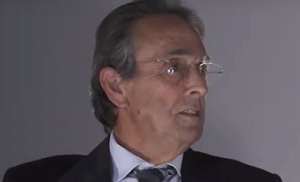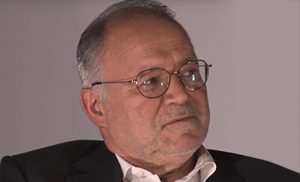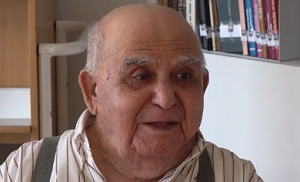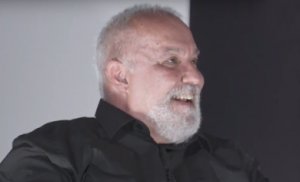
Frei Bento Domingues, Levy Baptista and Manuela Bernardino – CNSPP
Biographies
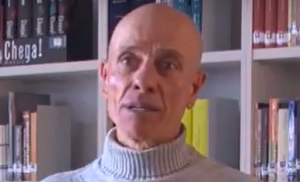
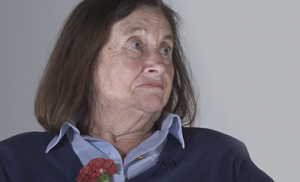
Basílio de Jesus Gonçalves Domingues was born on August 13, 1934, in Travassos (Terras de Bouro). In 1953, he took the name Friar Bento Domingues, when he entered the Order of Preachers (Dominicans). He studied philosophy in Fátima and theology in Salamanca, Toulouse, and Rome.
As an assistant to the Youth of the Church of Christ the King in Porto (1962-1963), linked to the Dominican parish, he was one of those responsible for the exhibition “The World Questions the Council,” which provoked a reaction from the PIDE/DGS (National Guard). He moved to the convent of Queluz, already having some contacts in Lisbon, such as Nuno Bragança and people linked to O Tempo e o Modo (Time and the Way). This was followed by exile in Rome. He returned to Portugal in 1965. He distinguished himself not only in religious and theological terms, but also in his resistance to the dictatorship among the so-called “progressive Catholics.” With Nuno Teotónio Pereira, he created the clandestine newspaper Direito à Informação (Right to Information). He participated in the National Commission for Assistance to Political Prisoners (CNSPP) and supported several people persecuted by the dictatorship, notably those linked to the Revolutionary Party of the Proletariat-Revolutionary Brigades (PRP-BR). In the early 1970s, he was questioned by the PIDE/DGS (Public Security Office) for criticizing the colonial war during a homily for children on World Peace Day. After the April 25th Revolution, he joined the Humberto Delgado Civic Tribunal, the General Pro-Amnesty Committee in Brazil, and the Committee to Support the Struggles of the Peoples of Latin America (CALPAL).
He distinguished himself as a teacher, thinker, author, and researcher in the field of theology. On April 25, 2004, President Jorge Sampaio conferred upon him the rank of Grand Officer of the Order of Liberty.
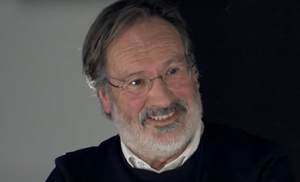
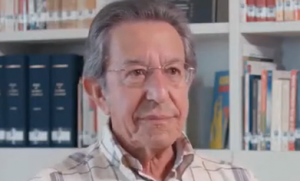
Levy Casimiro Baptista was born on April 23, 1935, in Ançã, a district of Coimbra, where he graduated in Law in 1959. In 1961, he was mobilized for the colonial war in Angola, where he served as a Public Prosecutor’s Office magistrate and judge in Luanda. Upon his return to Portugal, he defended several political prisoners in the Plenary Court. He was a member of the Executive Committee of the National Commission for Assistance to Political Prisoners. Between 1971 and 1974, he defended several Angolan activists imprisoned in the Tarrafal concentration camp before the Supreme Court of Justice. In 1973, he was a member of the National Committee of the Third Congress of the Democratic Opposition in Aveiro.
After the 25th of April Revolution, he served as chief of staff to Francisco Salgado Zenha, Minister of Justice of the First Provisional Government, and as a member of the Portuguese Democratic Movement/Electoral Democratic Commission (MDP/CDE) in the Constituent Assembly.
After the Constituent Assembly, he defended MFA military personnel accused of November 25th and several agricultural cooperatives in the Alentejo region. Between 1977 and 1982, he served as a lawyer for the Republic of Cuba, before the Territorial Military Court of Lisbon and the Supreme Military Court, in the case of the “bomb network” that bombed the Cuban Embassy in Lisbon, killing two employees.
With a fruitful connection to music and the Portuguese guitar, he recorded several albums.
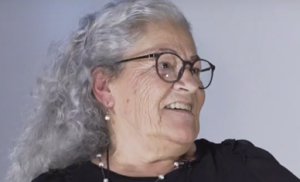
Maria Manuela Mendes Cruz Bernardino was born in Lisbon on December 5, 1943, and from a young age, she was involved in the political struggle and the fight against the dictatorship, joining the pro-Association of High School Students. In 1961, she became a member of the Portuguese Communist Party (PCP). She became a civil servant in 1970.
During the academic crisis of 1962, she was a leader of the Pro-Association of Secondary School Students of Lisbon and the Student Association of the Instituto Superior Técnico.
In 1963, she married José Bernardino, a student leader and PCP activist, in the Aljube prison, where he was imprisoned. On the day of the wedding, a major initiative took place in a restaurant in Parque Mayer, in solidarity with political prisoners.
Manuela Bernardino was a member of the Lisbon District Committee of the Democratic Electoral Commission (CDE) – representing the Democratic Women’s Movement (MDM), in whose creation she participated – and of the National Commission for Assistance to Political Prisoners.
After the April 25th Revolution, she served in various PCP bodies. He was a member of the municipal committees of Porto, Aveiro and Coimbra, the International Section, the Central Committee and the Central Control Commission.
Date of Collection: 16.11.2016
Keywords: CNSPP, Solidarity, Marcelism, Church, Human Rights, Colonial War, Aljube Prison.