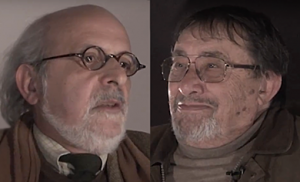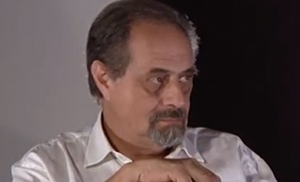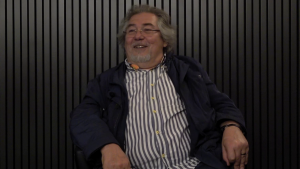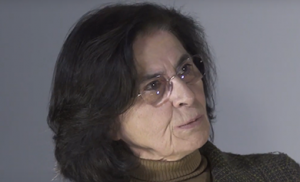
Joaquim do Carmo and Raúl Canal
Biographies
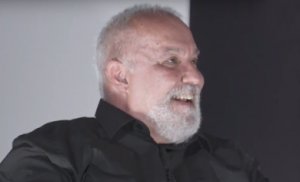
Joaquim da Silva Rodrigues Carmo was born on December 10, 1937, in Silves, a city with a strong cork industry and a long tradition of resistance. He followed in the footsteps of many cork workers from Silves and, at the age of seven, moved to Cova da Piedade with his family. During his childhood, he lived with his parents and brother in a room rented from the mother of Joaquim Montes, a cork worker who died in Tarrafal.
He began working at the age of 13 in a cork factory, where he lost part of a finger and suffered an accident to his eye. Linked to the Youth Movement for Democratic Unity (MUD), he joined the committees supporting Arlindo Vicente and Humberto Delgado in the 1958 elections. He was very active in local cooperatives and recreational societies. He was part of the cultural committee of the Cooperativa Piedense, which was closely monitored by the PIDE, and was involved with the Sociedade Filarmónica União Artística Piedense.
Following the large worker and student demonstrations in 1962 and the protests over the murder of Cândido Capilé, Joaquim Carmo was arrested in April 1963. After spending time in the Aljube and Caxias prisons, he was released in July 1963. He then went into exile in Sweden, where he left in August 1966, returning to Portugal after April 25, 1974.
Raúl Manuel da Silva Canal was born on March 17, 1927, in Seixal, where he lived and worked as a cork cutter at Mundet, a company that employed practically his entire family. He joined the Youth Movement for Democratic Unity (MUD), the Portuguese Communist Party (PCP), and later the Portuguese Democratic Movement/Democratic Electoral Commission (MDP/CDE). He was involved in numerous labor struggles for wage increases, safety, and better working conditions.
He actively participated in the activities of local communities and cooperatives. He was director-general of the library of the Sociedade Democrática Timbre Seixalense, a position from which he would be removed for political reasons by the mayor. The community was temporarily closed and targeted by the PIDE following a performance in 1946 by the Coro Lopes Graça choir, after which musicians and the population sang the verses of “As papoilas” (The Poppies), written by José Gomes de Ferreira, through the streets of Seixal.
He was also a member of the cultural section of the Cooperativa Operária de Consumo 31 de Janeiro de 1911 (Workers’ Consumer Cooperative), where the PIDE arrested him in October 1964. After passing through the Setúbal station, he was taken to the Aljube prison, where he was temporarily held incommunicado. At the PIDE headquarters in Lisbon, he was subjected to sleep deprivation and statue torture for five days and five nights. During the period of torture and interrogation, he refused to eat anything. He was released at the end of March 1965.
Date of Collection: 08.11.2017
Keywords: Aljube Prison, PIDE, Interrogations, Comunist Party, Torture, Cork Workers, Cooperatives, Family, Caxias, Informants, Culture.