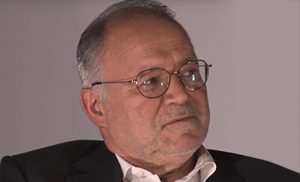
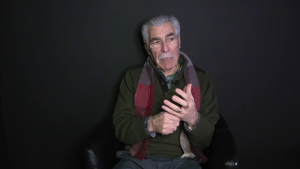
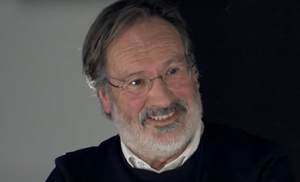
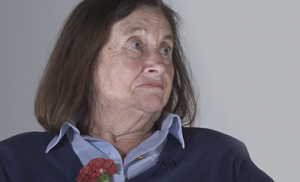
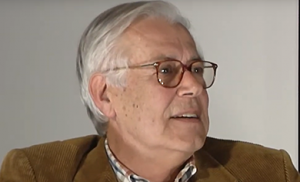
Artur Pinto and Filipe Rosas
Biography
Artur Eduardo Pires Alexandre Pinto was born on November 15, 1942, in Castro Daire. He distinguished himself in the fight against the dictatorship and, once in democracy, in the fight to preserve and promote the memory of the resistance.
In 1958, he participated in General Humberto Delgado’s presidential campaign. Between 1961 and 1965, he attended the Faculty of Law of the University of Lisbon, distinguishing himself in academic struggles and as a student leader between 1963 and 1965.
On January 21, 1965, Artur Pinto and dozens of other students were arrested by the PIDE (Institutional Detectives of the Interior), following a complaint from a student leader who had begun collaborating with the political police. Imprisoned in the Aljube Prison, Artur Pinto was later transferred to Caxias. In August 1965, he was sentenced in a full court to 16 months in prison, being released on a suspended sentence. In 1969, he served on the Democratic Electoral Commission (CDE).
After the April 25, 1974, revolution, he joined the PIDE/DGS and Portuguese Legion’s Dissolution Coordination Services and served on the State Secretariat for Regional and Local Organization of the IV Provisional Government. In the following decades, he would stand out as one of the most important activists in preserving the memory of the resistance. He was one of the founders of the Civic Movement “Don’t Erase Memory” (NAM) and played an important role in the creation of the Aljube Museum of Resistance and Freedom, with which he collaborated regularly, notably as a member of the Advisory Board and through the donation of part of his estate.
Filipe Manuel Mendes Rosas was born on February 8, 1945, in Lisbon, where he lived and studied medicine. At the age of 15, he participated in the pilgrimage to the Alto de São João cemetery on the occasion of October 5, 1960, suffering the first police charge of his life. In the early 1960s, while still a high school student, he joined the Portuguese Communist Party (PCP). In January 1965, he was arrested at home along with his brother Fernando Rosas. A complaint from a PCP official, who had begun collaborating with the political police, led to the arrest of dozens of students. He was sent to Aljube Prison and then to Caxias Prison. In the meantime, he was beaten at the political police headquarters. He was released after his trial in August 1965 and later joined the Student Democratic Left (EDE) and the Reorganization Movement of the Proletarian Party (MRPP). In 1971, to avoid a second arrest, he went into exile in Paris, during which time he participated in the Organization of Portuguese Emigrants and Exiles.
He returned to Portugal on May 1, 1974. An anesthesiologist, he was clinical director of the Hospital de Santarém and was involved in the founding of the Left Bloc.
Date of Collection: 18.05.2016
Keywords: Student Movement, Aljube Prison, Academic Crisis of 1962 and 1965, Family, Police Violence, Demonstrations, PIDE,Comunist Party, Colonial War, Interrogations, Torture, Trials, Caxias.