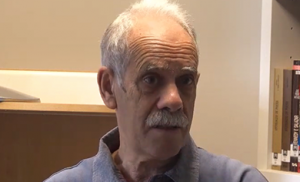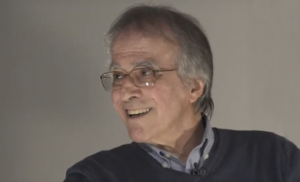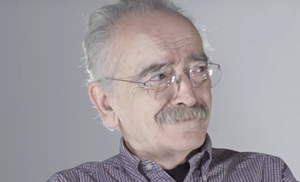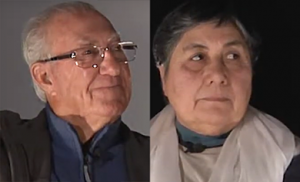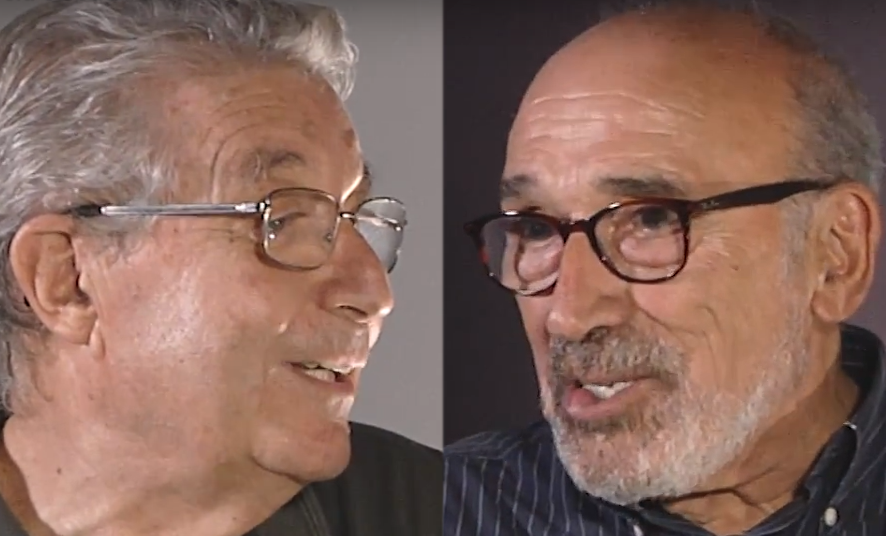
Fernando Correia and João Paulo Guerra
Biography
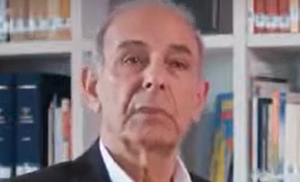
Fernando António Pinheiro Correia was born in Coimbra on July 4, 1942, into a communist family. His parents’ home served as a support base for resistance fighters, particularly those on their way into exile.
After enrolling in the Philosophy program at the University of Lisbon, he was a leader of the Pro-Association of the Faculty of Arts and the University Sports Center of Lisbon (CDUL), participating in several academic struggles, and joining the Portuguese Communist Party (PCP) in 1962. He began his journalistic career in 1966 at the Diário de Popular. He was editor-in-chief of Seara Nova and also worked at the Diário de Lisboa. He was arrested on April 18, 1974, and taken to the Caxias Fort, from where he was released in the early hours of April 27, going to the Diário de Lisboa newsroom to deliver the article “Testimony of a Diário de Lisboa journalist released today in Caxias.”
After the April 25th Revolution, he worked as a journalist and deputy editor of Avante!, participating in the launch of its first legal issue. He contributed to several publications: Vida Suíça, O Militante, Vértice, Seara Nova, Jornalismo e Jornalistas, or AbrilAbril. He served on the governing bodies of the Journalists’ Union and the Journalists’ Club. He was a member of the Press Information Council and the RTP Opinion Council. He dedicated himself to academic and teaching activities, as well as to research in the field of journalism at various schools and universities.
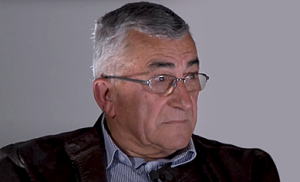
João Paulo Guerra Baptista Coelho Vieira was born in Lisbon in April 1942. His mother, Maria Carlota Álvares da Guerra, had founded the magazine Crónica Feminina.
While still a university student, he interned at Rádio Renascença (RR), on a program featuring, among others, Fernando Correia, Lauro António, João Mota, Daniel Ricardo, and his sister Maria do Céu Guerra. He would spend ten years at Rádio Clube Português (RCP), interrupted by two and a half years of military service in Mozambique as a militia ensign “caçador.”
He worked at Emissora Nacional (1974), where he was head of the Studies and Planning Office of the Program Directorate (1974-75). He was a correspondent in Lisbon for Rádio Nacional de Angola (1976-77), founded Telefonia de Lisboa, and worked at TSF and Antena 1. He was editor-in-chief of Notícias da Amadora and worked for and contributed to Diário de Lisboa, A Capital, República, O Diário, O Jogo, Público, O Jornal, and Diário Económico. He is the author of several investigative and fictional works, in which he pays particular attention to the colonial war.
He received dozens of awards throughout a distinguished career as a journalist and broadcaster. Politically, João Paulo Guerra was involved in the fight against the dictatorship and was affiliated with the Portuguese Communist Party (PCP).
Date of Collection: 04.10.2017
Keywords: Journalists, Censorship, Rádio Clube Português, Censorship in the Press and Radio, Colonial War, Society, Repression of Journalists.