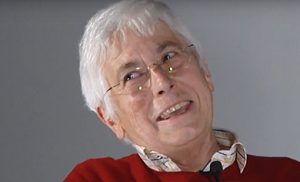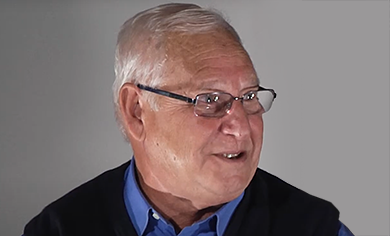
António Espírito Santo da Silva
Biography
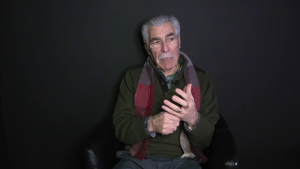
António Espírito Santo Silva was born on February 11, 1936, in Barreiro, a hotbed of anti-fascist resistance, into a family marked by struggles against the dictatorship, particularly strikes at the CUF (Federal University of Minas Gerais). Two of his uncles were persecuted by the PIDE (Political Policy for the Protection of Children and Adolescents). One of them—regularly dismissed for political reasons and detained on the eve of May Day—had refused to place the final rivet on the Marechal Carmona Bridge in Vila Franca de Xira, at the inauguration ceremony attended by Craveiro Lopes and Salazar.
Antônio Espírito Santo began working as a typographer at the age of 14. His politicization and political activity began within the Barreiro community, such as the Barreiro Education and Recreation Society “os Penicheiros,” where he was a member of the library department. In 1954, he joined the Democratic Unity Movement (MUD) Youth and organized activities with Alves Redol, Rogério Paulo, and the Lopes Graça Choir.
He was arrested at the age of 20, in November 1956, following a meeting in Alpiarça, where he was a speaker, organized under the pretext of commemorating the armistice of World War I. At the GNR station in Alpiarça, he managed to flush propaganda and illegal material down the toilet. He was placed in cell No. 4 of the Aljube prison, where he remained incommunicado for three months, then moved to a common cell. He was released on May 2, 1957, but was arrested again in September, and was sent to the Aljube prison, with frequent visits to the infirmary. Tried on May 13, 1958, in a full court, he was sentenced to an 18-month suspended prison sentence, being released the same day.
He was arrested for the last time in December 1967, following a session held at Luso Futebol Clube in Barreiro the previous month, attended by, among others, José Afonso, Adriano Correia Oliveira, and Carlos Paredes. He passed through the Setúbal civil government and was placed in solitary confinement at Caxias Prison, suffering four to five days of sleep torture. He was released in February 1968.
Date of Collection: 07.12.2016
Keywords: Family, Workers, Juvenile MUD, Collectivities, Aljube Prison, Comunist Party, Interrogations, Caxias, Torture.