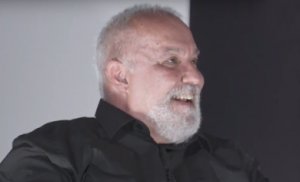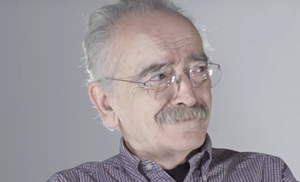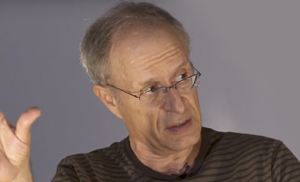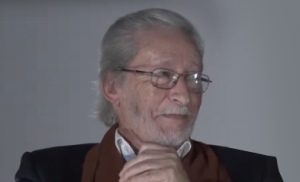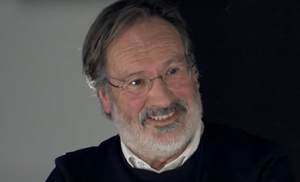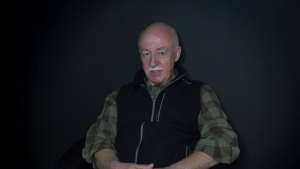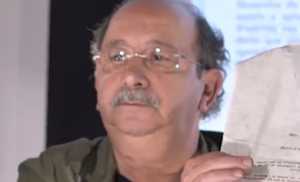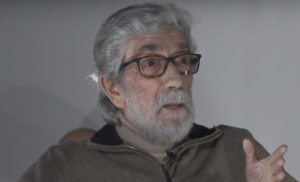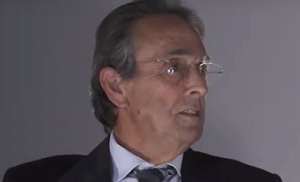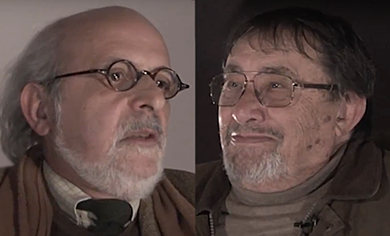
Camilo Mortágua and Fernando Pereira Marques
Camilo Tavares Mortágua was born in Oliveira de Azeméis on January 29, 1934. He was a leading figure in the armed struggle against the dictatorship. In 1951, at the age of 17, he emigrated to Venezuela. He became involved with Portuguese opposition circles in that country. He was a member of the Iberian Revolutionary Directorate for Liberation (DRIL) and participated in the hijacking of the Santa Maria liner in January 1961, the infamous “Operation Dulcinea” commanded by Henrique Galvão. In November of the same year, along with Amândio Silva, Camilo Mortágua, Fernando Vasconcelos, João Martins, Maria Helena Vidal, and Hermínio da Palma Inácio, he joined “Operation Vagô,” which hijacked a TAP plane and dropped thousands of leaflets from the Anti-Totalitarian Front of Free Portuguese Abroad over Lisbon. In May 1967, he participated in the assault on the Bank of Portugal branch in Figueira da Foz, carried out by the League of Union and Revolutionary Action (LUAR), of which he was a founder and leader.
After the 25th of April, he maintained ties with LUAR and actively participated in the political and social struggles of the revolutionary process, notably in the occupation of the Torrebela estate and the establishment of the corresponding cooperative. In June 2005, he was awarded the rank of Grand Officer of the Order of Liberty of the Portuguese Republic by the President of the Republic, Jorge Sampaio. In 2013, he published his memoirs, “Andanças para a Liberdade” (Walks to Freedom). Camilo Mortágua died at the age of 90 on November 1, 2024, in Alvito, where he lived.
Fernando Alberto Pereira Marques, “Nelson,” was born in Coruche on April 16, 1948.
In 1966, he moved to Paris, where he worked as a student-worker and assisted a disabled man. Studying sociology at the Sorbonne, he participated in the May 1968 events. He was one of the 500 students arrested on May 3, 1968. On May 22, with other students, he occupied the Casa de Portugal, the residence of Portuguese university students, proclaiming it the “first free and socialist territory of Portugal.”
A member of the League of Union and Revolutionary Action (LUAR), he participated in the attempted takeover of the city of Covilhã in August 1968, following which he was arrested by the PIDE on August 20, 1968, and sent to the Caxias prison. In April 1969, he was transferred to the PIDE delegation in Porto, where he would assist Palma Inácio’s escape in May. Tried on May 8, he was sentenced to two and a half years in prison.
After serving time in the Caxias and Peniche prisons, he was transferred in February 1971 to the Psychiatric Annex of the Lisbon Penitentiary. That same month, he began his period of security measures at the Peniche fort. He was released on August 6, 1971. In 1973, he returned to exile in France, where he directed the LUAR newspaper, Fronteira.
He graduated from the École des Hautes Études en Sciences Sociales (EHESS) in Paris, developed academic and teaching activities, dedicated himself to research, and is the author of several works. He was also a member of the Assembly of the Republic and a national leader of the Socialist Party.
Date of Collection: 03.03.2016
Keywords: Operation Dulcinea – Assault on Santa Maria, LUAR – League of Union and Revolutionary Action, Prison, Armed Struggle, Operation Vagô – TAP plane diversion, Palma Inácio Escape from Oporto prison.