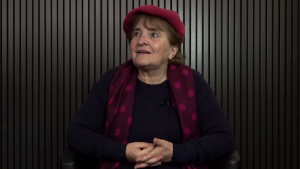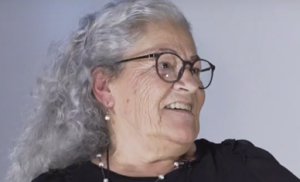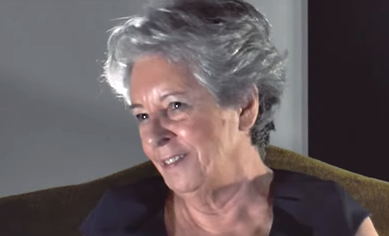
Helena Pato
Biography
Maria Helena Martins dos Santos Pato Noales Rodrigues was born on April 19, 1939, in Mamarrosa (Aveiro). Her father had been under surveillance by the political police, and her grandfather had been arrested. In 1956, she entered the Faculty of Sciences. She joined the Youth Democratic Unity Movement (MUD), participated in the struggle against Decree-Law No. 40,900, and participated in association activities and the University Film Club. As a student leader, she was involved in the academic crisis of 1962, being detained for 48 hours.
After May 1, 1962, her husband, Alfredo Noales, left for Paris. Helena joined him shortly thereafter. However, diagnosed with a fatal lymphoma, Noales requested authorization from the PIDE (Institutional Inspectorate of the Portuguese Democratic Party), which was initially denied, to come and die in Portugal. Upon arrival in November 1965, he was immediately taken to PIDE headquarters and released hours later. She died a month later.
With growing political activity in the Portuguese Communist Party (PCP) and the Commission for Assistance to Political Prisoners, Helena Pato was arrested in June 1967 at the Caxias prison. Suspected of links to the armed struggle, she was subjected to a long period of isolation, assaults, and sleep torture. She was released in November 1967. In 1969, she helped found the Women’s Democratic Movement (MDM) and participated in the campaign of the Democratic Electoral Commission (CDE).
After the April 25th Revolution, she served on the installation committee of the teachers’ union. She was a leader of the Don’t Erase Memory Movement (NAM), is a book author, and coordinates the Antifascists of Resistance page and the “Fascism Never Again” group on Facebook. She has collaborated regularly with the Aljube Museum since its inception.
Date of Collection: 30.09.2015
Keywords: Women, Solidarity, Prison, PIDE, Aid to political prisoners, Interrogation, Torture, Isolation, Caxias.